


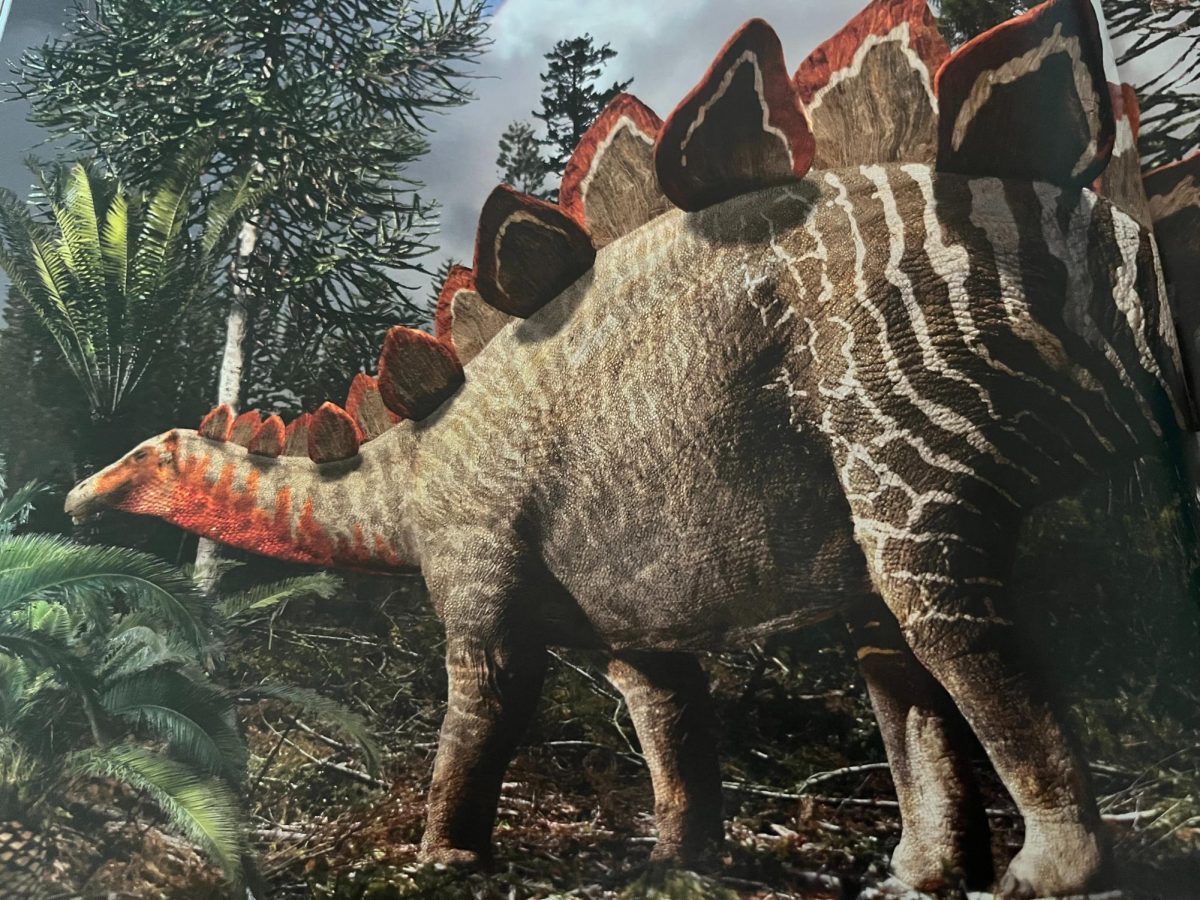
The Stegosaurus lived in the late Jurassic period along with many other dinosaurs in the same families. They were spiked lizards with many plates on their backs. Although still in debate, they’d likely use them to regulate their body temperature (thermoregulation). They were also likely used for defence against larger theropods trying to hunt them down and feed on their flesh, with the Allosaurus as a common predator of the Stegosaurus. These two dinosaurs lived in the same period in the late Jurassic period, and many people believed that the Tyrannosaurus Rex lived in the same era as the Stegosaurus, as seen in many media. However, this is far from the truth, as the king of the lizards lived in the Cretaceous period, 68-66 million years ago, where the Stegosaurus lived roughly 155-145 million years ago.
The Stegosaurus is reported to have used its thagomizer (four to ten spikes on its tail) against larger theropods or large crocodiles to defend itself, as fossil records show piercing from the Stegosaurus’ tails on Allosaurus fossils. They also had underskin that was covered in armor around their necks, which was called gular armor, and protected the weaker spot of the neck of the Stegosaurus.
These giant herbivores belong to the Stegosauria family, which are thyreophorans that contain long shoulder spikes and two rows of plates running along their back. Many of the dinosaurs fall into this category, with the Stegosaurus being the most well-known. However, many other species are shadowed by the Stegosaurus, with those being: Kentrosaurus, Tuojiangosaurus, Huayangosaurus, etc. There are many different types of dinosaurs, with all of them having their own unique traits, and the Stegosaurus is only a small part of them. Yet they still stick out the most with their interesting set of plates on their backs, and questioning what they were actually used for.