


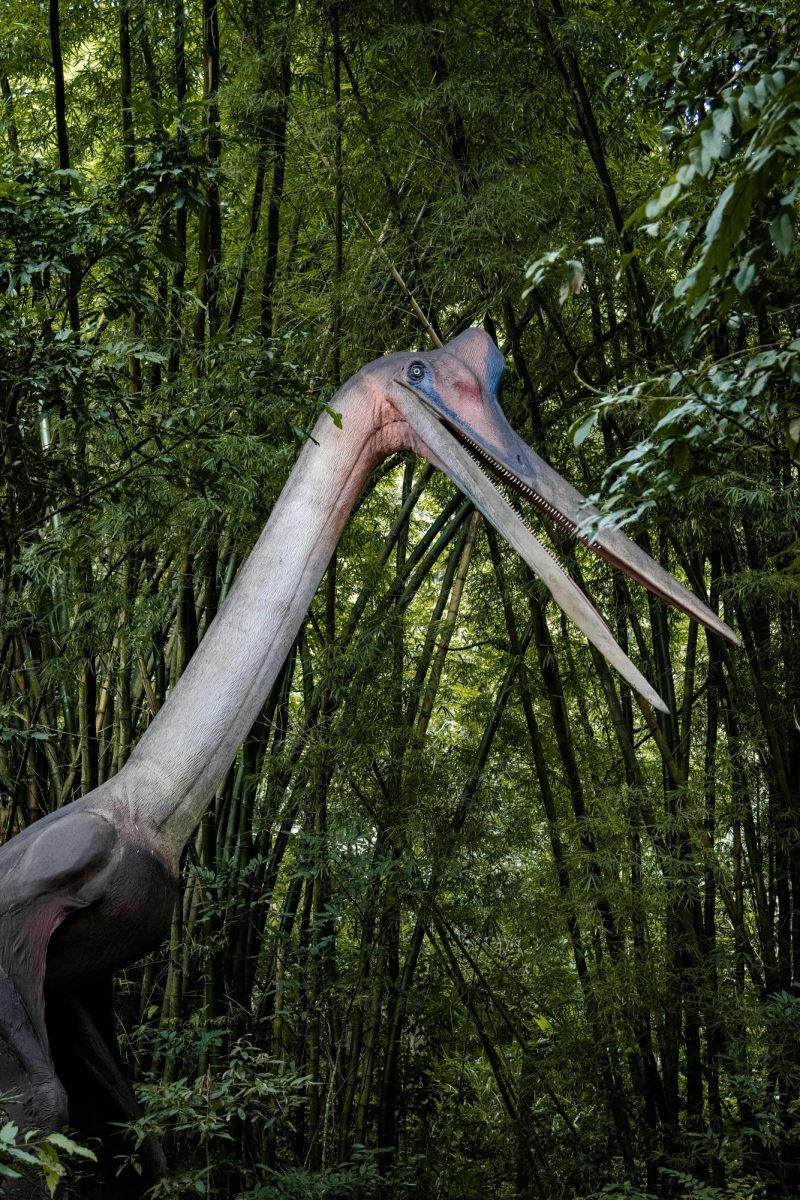
What is a Quetzalcoatlus?
A Quetzalcoatlus was a massive Late Cretaceous pterosaur that lived approximately 66-72 million years ago. which in fact is not a dinosaur. It’s the largest known flying creature that has ever lived throughout history, boasting a 33-36 foot wingspan and standing as tall as a giraffe.
Quetzalcoatlus characteristics:
Diet- They likely ate fish carrion and small dinosaurs, or even large predators.
Reproduction: They laid soft shelled eggs.
Habitat: they inhabited wide floodplains rather than coastal environments.
Are they considered Dinosaurs or Pterosaurs?
A lot of people have mistakenly thought that the Quetzalcoatlus was considered to be a dinosaur, since they are giant warm blooded reptiles. They also lived alongside the dinosaurs during the Late Cretaceous period. But in reality they aren’t considered to be dinosaurs, they’re actually pterosaurs. You might be thinking, what is a pterosaurs? Well a pterosaurs is to be distinct group of extinct flying reptiles where they lived alongside the dinosaurs, which in cases that they were the closest relatives.
What if they happen to still be alive today?
There are a lot of people out there who might be thinking “oh wouldn’t it be great to have the dinosaurs back?” I mean they are very cool to look at and to truly admire. But having the Quetzalcoatlus is most definitely not something that we would want to ever bring back. You wouldn’t be able to out survive a Quetzalcoatlus and here are some reasons why. The Quetzalcoatlus may look harmless but in fact they are dangerous and horrifying creatures. They were 3 times the size of you and having the wingspan size of a bus, they also have 5 times better eyesight than humans do. They could easily see tiny movements from miles away and when they spot you, they could jump up to about 8 feet. They also wouldn’t flap their wings; they would just glid off which makes harder for the predator to hear them coming. If you were to manage to outrun them even with them having their hollow bones which makes them fly fast. They are also able to run on all fours. You might think that you are safe when your hiding ,but when then they are able to spot you, they would use their 8 foot beak to jab through and grab you and if you were small enough they would eat you whole, if you happened to be larger they would jab you until you are parts that can be eaten easily.
10 fun facts about Quetzalcoatlus
Fast light speeds- They are experts at having fast light speeds that these giants are able to fly approximately 65 miles per hour.
Enormous size- The Quetzalcoatlus is to be considered to be the largest flying animal in history that was to be discovered. Where they have their wingspan is roughly 10-11 meters (33-36 feet)
Giraffe-like stature- When being on the ground, this creature is just as tall as a modern giraffe. Where they stand about 5-6 meters (16-18 feet) high.
Texans origins- Something that I found out that was really surprising to me was that long ago they lived in North America, but their first fossils were discovered in 1971 by Douglas A. Lawson in a big bend national park that was in Texas.
Long Toothless Beak- The Quetzalcoatlus has a spear-like beak with head stretching that is over 3 meters long, which was then used for snapping up to small animals, insects.
Lightweight for flight- Despite having its massive size, it’s actually surprisingly lightweight that is to be estimated at 200-250 kg or 440-550 lbs due to the fact that the Quetzalcoatlus have hollow bones.
Unique four legged walk- The Pterosaurs, unlike dinosaurs were plantigrade meaning they walked with their heels on the ground using their winged forelimbs for support.
Two species recognized- They were fossil finding suggest two species the massive Q Northropi and a smaller, that is more common species that is named Q. Lawsoni
Feathered serpent name- It was named after the Aztec god Quetzalcoati.
Terrific terrestrial Predator- Contrary to popular belief it likely spent much of its time on land, walking on all fours and acted as a land based predator rather than a seabird like fisher.
Sources-
https://www.britannica.com/animal/pterosaur