

Life, the essence of Earth. There are many creatures in every nook and cranny of this rock. From the marina trench to mountains, to populated cities and deserted islands, life is everywhere. Sometimes those animals look very strange compared to what we’re used to because they’re adapted for life in their environment, not our environment, and I’ll spotlight some of those animals. These animals I’ll talk about are either very interesting, look unusual, or look like something out of Pokémon.
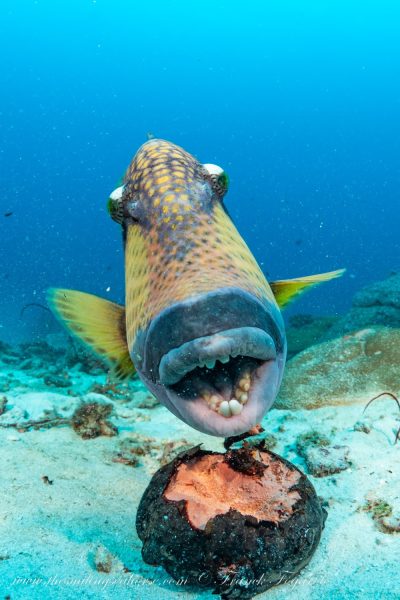
Titan Tigerfish
This fish from the side or back might appear very normal, but the front is where it’s strange. Unlike most fish, the Titan Tigerfish has teeth that kinda look a lot like a British person. It’s uncanny for a fish to have teeth like a human’s because most fish don’t have teeth like that. Generally, fish don’t need teeth to eat their food because they’ll just eat it whole by sucking it in. This means that their diets are composed mostly of other soft fish that can just be eaten whole. The titan tigerfish is different because it eats crustaceans and other hard animals like crabs, snails, sea urchins, etc. A video about the titan tigerfish in 2020 blew up because it looked so funny and weird. It got even more popular after people edited the video into a picture of the fish looking like Travis Scott. This was all in fun and games and even Travis Scott thought it was pretty funny. The titan tigerfish live in tropical Indo-Pacific oceans in lagoons and seaward reefs.
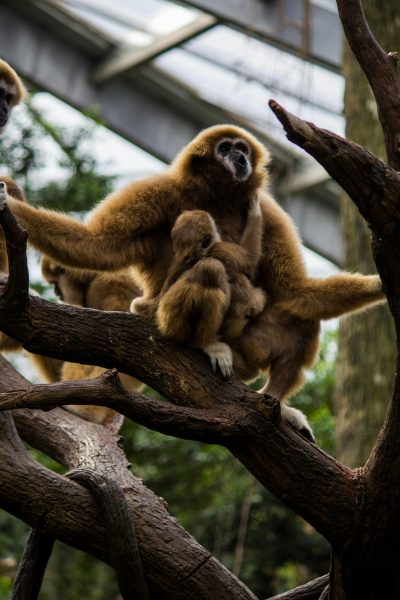 Gibbons
When I first looked at images of this animal I thought it was a spider monkey and got really confused. Both of them had long arms, short legs, and a narrow torso. The difference between the two is that a Gibbon doesn’t have a tail, while a spider monkey does. This also means that Gibbons are apes, not monkeys. With their long arms and short legs they walk really funny. Since their center of balance is high up and they don’t have a tail, they have to raise up their arms as a way to balance themselves while walking. Gibbons can also swing through trees and are really agile at it too. Gibbons are mainly herbivores, eating fruit from the trees they climb, but they sometimes eat insects. A main characteristic of Gibbons is that they are very social creatures and communicate through howling really loudly. This can be just so others know they are around or to warn about potential danger in the area. Both parents help raise their young, and they live as a family until the offspring matures and “moves out.” Gibbons live all over Southeast Asia.
 Binturong
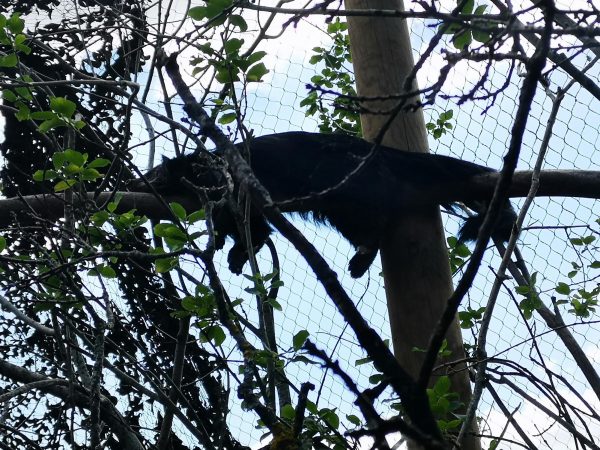
Also called a Bear cat, binturongs look like a mix of a raccoon, a cat, and also a bear. Binturongs aren’t related to the cat or bear family, they hail from the Viverridae family. Binturong are 2 to 3 feet long and weigh 20 to 50 pounds. Most of the length and weight comes from their very strong tails. Their size is very comparable to a medium sized dog. Binturongs are omnivores, and they eat fruit and small animals. They smell like popcorn, but you can’t have them as pets since they are in the vulnerable category. Lastly, Binturong live in the south and southwest Asia in trees.
 Shoe Bill
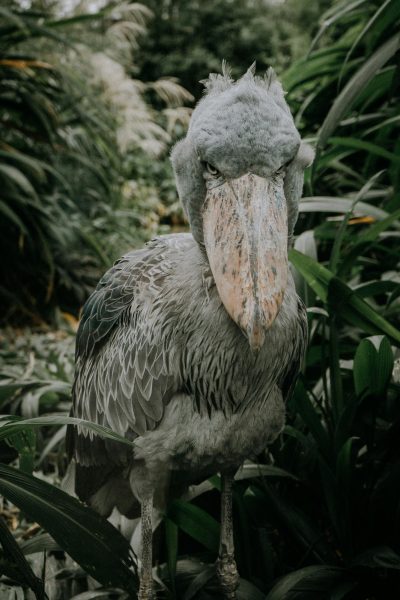
Just from looking at the shoebill you can tell this animal is weird and maybe even scary. Their beaks can be 9 inches long and 4 inches wide. With that hard, big beak they make a noise that’s a lot like a machine gun going off. Although their beaks are big, they can still stab fish with a pointed hook near the bottom. Since shoebills get to 5 feet tall they can eat some pretty large things. Some things they eat are small crocodiles, lungfish, which get to 6 feet long, and other smaller fish. Since the Shoebill is a bird it can fly, but it flaps its wings the slowest out of nearly any other bird with its 8 foot wing span.
 King Vulture
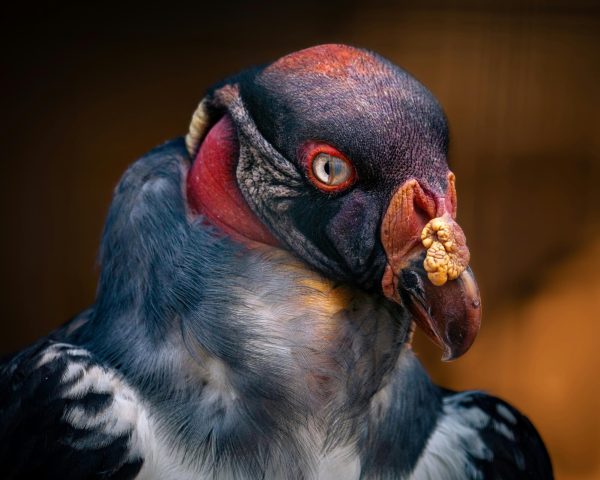
Another bird on this list, the King vulture has very vibrant and colorful skin on its head. Their eyes look really dead, a lot like a goggly eye. It doesn’t help the fact that these vultures don’t have eyelids. King Vultures only grow to 2 and a half feet and weigh 8 pounds. Since it’s a vulture it preys on carcasses but can hunt for itself. Normally they’ll wait for the bigger, stronger vultures to find food and will then eat. A theory about its coloring is that it attracts a mate. A vulture that has bad colors doesn’t get a mate, which means it can’t pass on its “bad” coloring gene, a vulture with desirable coloring gets mates, which means its “good” coloring gene does get passed on.
 Mantis Shrimp
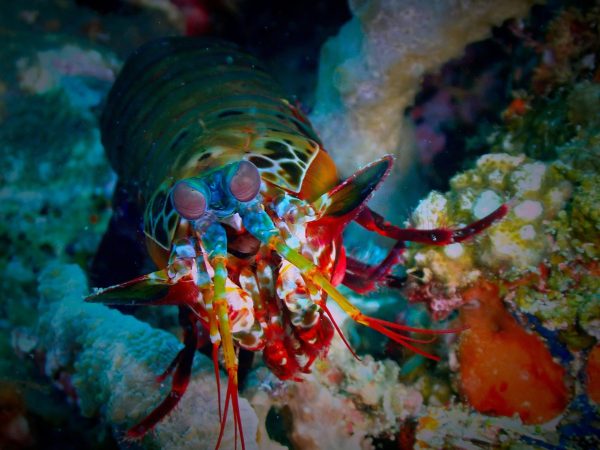
The mantis shrimp is my personal favorite sea animal. They are colorful everywhere, which really complements the fact that they can see more colors than us. We only have four receptors in our eyes, a blue cone, a red cone, a green cone, and a rod which detects black and white. Mantis shrimps have anywhere from 12-16 detectors for color/light, which means that they can produce far more colors than we can. Comparatively, it’s like how animals can easily hide from predators, but we can see them easily. It’s because we can see the difference better in colors compared to that predator. The Peacock mantis shrimp is known for having the most powerful punch of any animal, even though they weighs only 3.2 ounces. They punch as if you got shot by a .22 caliber bullet. They use this force on hard-shelled crustaceans to both destroy them and disorient them. It’s important to remember that since they do all this underwater, their punch out of the water would be faster. Which means it would be even more powerful when taken out of the water. Mantis shrimp live in the tropical waters of the Indian and Pacific oceans.